















Things to Consider When Buying a Salvage Motorcycle

Key Takeaways
10 minute read- Salvage titles don't mean worthless bikes: A salvage title simply indicates repair costs exceeded 75-90% of market value, but many bikes have only cosmetic damage or were theft recoveries with minimal mechanical issues.
- Flood damage poses the highest risk: Water intrusion can cause hidden corrosion and electrical problems that may not appear immediately, making flood-damaged bikes the most dangerous salvage purchases.
- VIN verification is absolutely critical: Always check that the VIN matches across the frame, engine, and title, as mismatches indicate potential illegal part swaps or hidden history.
- Insurance and financing are severely limited: Most insurers deny collision/comprehensive coverage for salvage bikes, and traditional banks won't offer loans, requiring cash purchases.
- Budget far beyond the sticker price: Factor in auction fees, shipping costs, mandatory inspections, registration requirements, and extensive repairs that can significantly exceed the initial purchase price.
Admit it or not, buying a salvage motorcycle for half its market value is tempting, right? Especially if it's a shiny Harley Davidson or one of your dream bikes!
Buying salvage motorcycles has become easier, but also more complicated, as online platforms have expanded to salvage motorcycles.
Before making a bid, whether in person or online, there are several things to consider before buying a salvage motorcycle. Understanding these factors will determine whether you get an incredible deal on a dream bike or end up with an expensive nightmare.
Understanding salvage motorcycles: What you are really buying
Insurance companies will issue a "salvage" title to damaged motorcycles that would cost more to repair than their market value, generally between 75% and 90% of their value before the damage. Depending on the state, other common title types are "rebuilt" and "restored salvage."
Common misconceptions
Many people avoid motorcycles with a "salvage" title due to doubts about their quality and roadworthiness. However, a salvage title does not automatically mean the motorcycle has no value. Sometimes, the bike has purely aesthetic damage, such as a twisted frame or broken forks. Other times, it may have been recovered from a theft incident where nothing was physically damaged, but some parts were simply modified or stolen. Many buyers actually manage to get a good deal when buying salvage motorcycles.
Another misconception is that a clean title is free of damage. This is not always true. Some motorcycles are involved in accidents but do not receive a "salvage" title. Meanwhile, a "salvage" title can sometimes mean greater transparency since this title requires disclosing all past issues.
Knowing the source of the damage
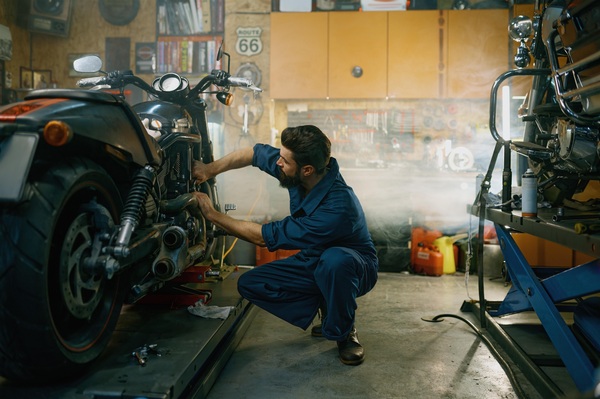
The first step you should take when buying a salvage motorcycle is to understand why a motorcycle ends up with a salvage title. Some common reasons a motorcycle receives a salvage title are:
Collision damage
Collision damage ranges from simple aesthetic issues to significant structural problems. While some aesthetic damage does not affect overall performance, it can be permanent. For example, scratched or cracked fairings may look bad but may not have mechanical effects.
Flood damage
Flood damage is perhaps the riskiest. Water intrusion may not be evident, but it can cause problems immediately and over time. For example, this 2021 Yamaha R7 may appear to be in perfect condition, but there could be rust on the engine bolt heads, the frame, the fairings, the seat supports, the handlebars, and more. Rust can also be found under the seat panel or in the base structure that supports the seat cushion.

Theft recovery
Motorcycles recovered from theft often have minimal mechanical damage. However, there may be missing components or have replacement parts that have been installed by thieves. Some commonly missing components in recovered stolen motorcycles are the ignition switch and keys, the engine control unit (ECU), exhaust systems, the odometer, and mirrors and fairings that are panels or outer covers made of plastic or fiberglass designed to improve the motorcycle's aerodynamics. You should keep these common reasons in mind for why a motorcycle receives a salvage title, as this will help you assess the true condition of the motorcycle you are considering.
Signs of deeper problems
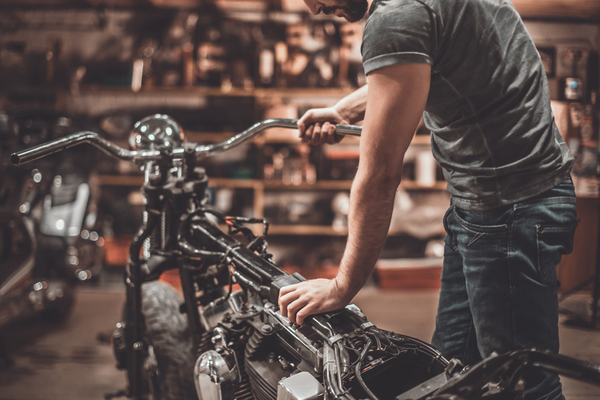
Some damage is not so obvious, so you will need to look beyond the surface. Uneven tire wear, missing fasteners, or misaligned handlebars may suggest past impacts or hasty repairs. Non-OEM welds or repainted sections of the frame could hide previous structural repairs. Additionally, aftermarket alarms, spliced wiring, or electrical tape may seem minor, but they can cause persistent failures if poorly done. If you see any of these issues, do not hesitate to ask the seller for confirmation.
Online signs to detect problems
When buying a salvage motorcycle online, you should also look for signs that could cause problems later. Pay attention to online listings with heavily filtered photos or intentional evasion of critical angles. A lack of detailed shots of the engine, forks, or exhaust system can be a red flag. Additionally, generic descriptions lacking a specific VIN history or repair notes may be hiding something. If you see any of these issues, you can ask the seller to send a walk-around video and more detailed information about the VIN and repair history.
Where to find salvage motorcycles: Reliable sources vs. suspicious sources
The next thing to do to avoid all the headaches associated with buying a salvage motorcycle is to buy from reliable sources and avoid suspicious ones. Online platforms are also on the rise and are worth verifying.
Reliable sources
Choose established salvage motorcycle auctions like Copart and SalvageBid, as they have standardized documentation practices. Local motorcycle salvage yards may also be a good option, as they often allow for a physical inspection before purchase. Another good option is dealerships specializing in restored salvage motorcycles, as they employ professionals for reconstruction and repair.
Suspicious sources
Watch for these warning signs from suspicious sources:
- Unusually low prices without a valid explanation that usually hides deeper problems
- Inconsistent information about the motorcycle's damage and repair history
- Reluctance to show title documentation and the vehicle identification number (VIN)
Do not give in to offers that present these warning signs, no matter how tempting they may be. Stick to reliable actions, salvage yards, and dealerships to minimize your risks.
Online platforms
Online platforms have significantly expanded their offerings of salvage motorcycles. Sites like Copart, SalvageBid, Autotrader Motorcycles, and eBay Motors now offer extensive selections of salvage motorcycles. These are your best options if you are looking for rare but highly sought-after brands like Honda, Harley-Davidson, and Indian. Rare models from these brands can be hard to find in your local market. However, buying online means you will likely rely on photos and digital documentation. Therefore, verification becomes even more critical when buying salvage motorcycles online.
Researching the motorcycle's past
Now that you know what to expect and what to look for in a salvage motorcycle and where to safely obtain one, it’s time to learn how to research a motorcycle's past.
VIN checks
First, never, as in never, skip the VIN check. Use VIN check services like NICB, CycleVIN, or NADA motorcycles to verify accident history and theft status. Confirm that the VIN on the frame, engine, and title match. If not, save yourself the trouble and walk away from the deal. A VIN that does not match between the frame, engine, and title could mean that some parts may have been illegally swapped, that part of its history (such as accidents, thefts, major repairs) may have been hidden, and that the motorcycle cannot be legally registered. You should also check previous auction history through AutoBidMaster to see any previous listings or detect hidden damage.
Ownership history
You will want to buy a salvage motorcycle with a clear ownership status. Ask for photos of the front and back of the title to ensure that the seller is the legal owner. Avoid motorcycles with active liens, especially repossession or recovery lots, as you may face ownership issues. You may not be able to obtain legal ownership until the lien is lifted, a process that is often complicated and costly. Pay attention to salvage motorcycles that record multiple owners in a short time, as this could mean unresolved issues such as persistent electrical problems, engine issues, frame misalignment, or hidden flood damage.
Ask the right questions
You are researching, so of course, you should ask the right questions. Ask things like: Why was the motorcycle declared a total loss? What parts have been replaced? Have the repairs been done professionally? Has it passed the state inspection? (If so, ask for documentation)
Additional verification for online purchases
If you are buying online, you will need to do additional due diligence beyond the steps mentioned above. Some actions you can take are:
- Research reverse images to verify the authenticity of the listing photos. Do this by going to Google Images, clicking on the camera icon, and uploading the image or pasting its link. You will get results showing websites that also use this image, other similar images, and the date of the image, such as the date and source.
- Check the seller's reputation by consulting online reviews such as member ratings from Copart.
- Consult forums like r/motorcycles on Reddit for more information about online auctions, sellers, and the overall buying experience.
- Request a high-resolution walk-around video showing the start-up, controls, and lights.
Legal and financial considerations
Buying salvage motorcycles involves significant legal and financial limitations that you should be prepared to face in advance.
Registration requirements
Registration requirements vary from state to state. Many states require inspections before and after repair before allowing road registrations. Some states will issue "rebuilt" or "restored salvage" titles only after passing the appropriate inspections. These registration requirements mean that you cannot ride your motorcycle immediately until it is legally identified and documented as roadworthy.
Insurance limitations
Insurance limitations can be significant with salvage motorcycles. While liability coverage may be widely available, collision and comprehensive insurance are often denied for salvage motorcycles. If you obtain collision and comprehensive insurance for your salvage motorcycle, expect lower payout limits in case of theft and future accidents. Get multiple quotes from different insurers and choose the best for your needs.
Financing issues
Most traditional banks will not offer loans and financing options for motorcycles with a salvage title. Similarly, online auction platforms like Copart require cash payment upfront plus shipping, taxes, and auction fees. Finally, you should think twice about future resale value, as motorcycles with salvage titles are harder to sell.
Budget beyond the purchase price
The listed price is just the minimum you will have to pay. Other costs include:
- Initial maintenance costs for complete fluid replacement, new spark plugs, battery testing, tire replacement, etc.
- Online purchase costs such as auction fees, processing fees, taxes, shipping costs, and transportation costs. Don’t forget that you cannot ride your salvage motorcycle until it is inspected and registered. You will need a trailer to transport your motorcycle first.
- The repair and legal costs to turn a salvage motorcycle into a safe, roadworthy, and legally registered vehicle must also be calculated.
Be prepared to take on these costs when buying a salvage motorcycle.
Is a salvage motorcycle right for you?
Who it’s best for
Salvage motorcycles offer excellent value for certain buyers such as:
- Experienced motorcyclists looking for secondary bikes or track-only bikes
- Budget-conscious buyers who are comfortable with a "salvage" title
- Collectors looking for rare models like Harley Davidson trikes, vintage Hondas, and used Indian motorcycles.
Who should avoid it
Buying salvage motorcycles is not recommended for:
- New motorcyclists who need reliability, comprehensive insurance, and are conscious of future resale value.
- Buyers who need financing or plan to trade the motorcycle after a while.
- Motorcyclists who feel uncomfortable with the mechanical uncertainties associated with salvage motorcycles.
Alternatives to consider
If buying salvage motorcycles is not for you, some alternatives to consider are certified used motorcycles from local or online motorcycle dealerships, motorcycles with clean titles but minor aesthetic imperfections, and older used motorcycles near me with verifiable maintenance history.
Final checklist before purchase
- Before finalizing the purchase of a salvage motorcycle, especially online, use this checklist:
- Confirm that all title documentation matches the VIN numbers on all components
- Research the seller's reputation through reviews and feedback
- Request high-resolution walk-around videos showing functionality
- Verify shipping arrangements with reputable carriers
- Never finalize payment until the documentation is fully verified
Conclusion
If done correctly, buying a salvage motorcycle, whether online or in person, could be one of the best decisions you make. With thorough research, proper verification, realistic expectations, and preparations regarding repair needs and legal requirements, you can enjoy many years of riding your dream motorcycle, even if it has a salvage title.