





Are There Online Car Auctions Open to the Public?


Key Takeaways
9 minute read- Public access is available — Anyone can register and bid at major online car auctions like Copart and IAA without needing a dealer's license
- Membership costs range from $99-$249 annually — Copart offers basic and premier tiers while IAA charges $200/year with unlimited bidding
- Vehicles come from five main sources — Repossessions, insurance salvage, government fleets, clean-title donations, and stolen recoveries all bypass traditional dealerships
- Hidden costs add up quickly — Buyer premiums, taxes, transport fees, and storage charges can turn a $500 winning bid into a $2,000+ total investment
- Inspection limitations create risk — Most purchases are "as-is" with no test drives or diagnostics, making mechanical knowledge and third-party inspections essential
The short answer is yes. There are several online car auctions that are open to the public, including major platforms like Copart and IAA, local and government auctions. It is possible to score a great deal with access to the same auctions that dealers, fleets and companies use without holding a dealer's license. However, your ability to bid depends on where the vehicle is located, not where you live. Many states restrict private buyers from bidding on salvage vehicles, and some restrict clean title vehicles as well.
In this article we will take a closer look at public online car auctions, where the vehicles are sourced from, how the buying process works, critical state bidding restrictions you need to understand, and the benefits and risks that you need to understand before you make a bid.
What Are Online Car Auctions Open to the Public?
An online car auction is a digital platform where vehicles are sold to the highest bidders through timed or live bidding. Rather than standing in a physical auction lane, the buyer can take part via a mobile app or website. Online car auctions are open to the public for registration, and no dealer's license is required to create an account. However, bidding eligibility is determined by where the vehicle is located, not where you live. Many states restrict private individuals from bidding on salvage vehicles, and some restrict clean title vehicles as well. In restricted states, you'll need to use a licensed broker service to bid on your behalf.
This is the main difference from the dealer-only auctions which are restricted to licensed automotive dealers. In practice this works like a fast-paced garage sale with transparent bidding. It's competitive, it occurs in real time with the same current price and countdown clock.

Understanding State Bidding Restrictions: Can You Actually Bid?
Before getting excited about a vehicle, understand that your ability to bid depends on where the car is located—not where you live. This is one of the most important factors that many first-time buyers overlook. Here's what you need to know:
How Restrictions Work:
- Restrictions are based on the vehicle's location (the auction yard state), not your residency
- Even if you live in an unrestricted state, you cannot bid directly on vehicles in restricted states
- Different restrictions apply to titled (clean) vs. salvage vehicles
- Recreational vehicles (boats, jet skis, ATVs) often have separate rules
- Business buyers and dealers face fewer restrictions than private individuals
Most Restricted States for Private Buyers:
States requiring brokers for BOTH titled and salvage vehicles:
- Florida (all categories restricted for private buyers)
- Illinois
- Tennessee
- Virginia
- West Virginia
States requiring brokers for salvage vehicles only:
- Alabama (salvage only)
- California (salvage only)
- Colorado (salvage with exceptions)
- Connecticut
- Delaware
- Hawaii (salvage only)
- Indiana
- Kentucky
- Maine
- Maryland
- Massachusetts
- Michigan (salvage only)
- New Hampshire (salvage only)
- New Jersey
- Utah (salvage only)
States with other significant restrictions:
- Nevada (general businesses and private buyers restricted)
- New Mexico (general businesses and private buyers restricted)
- New York (general businesses and private buyers restricted)
- North Dakota (general businesses and private buyers restricted)
- Rhode Island (general businesses and private buyers restricted)
- South Carolina (general businesses and private buyers restricted)
- South Dakota (general businesses and private buyers restricted)
- Texas (private buyers restricted for titled, but can bid on salvage)
- Washington (private buyers restricted for titled, but can bid on salvage)
Least Restricted States for Private Buyers:
These states allow private individuals to bid on both clean title and salvage vehicles:
Alaska, Arizona, Arkansas, Georgia, Idaho, Iowa, Kansas, Louisiana, Minnesota, Mississippi, Missouri, Montana, Nebraska, North Carolina, Ohio, Oklahoma, Oregon, Pennsylvania, Vermont, Wyoming
When You Need a Broker:
If the state where the vehicle is located shows restrictions for your buyer type, you'll need to hire a licensed broker service to bid on your behalf. Services like RevvBid, A Better Bid, and others specialize in this. Broker fees typically range from $50-$150 per vehicle, plus they may charge a percentage commission.
Where to Check Eligibility:
Before bidding, always verify state eligibility at RevvBid's comprehensive guide.
The Sources of Vehicles:
At a public online car auction there are five main vehicle sources:
- Repossessions: From banks and lenders.
- Insurance salvage: These are vehicles that were damaged by accidents, theft, floods or hail, but they may be repairable.
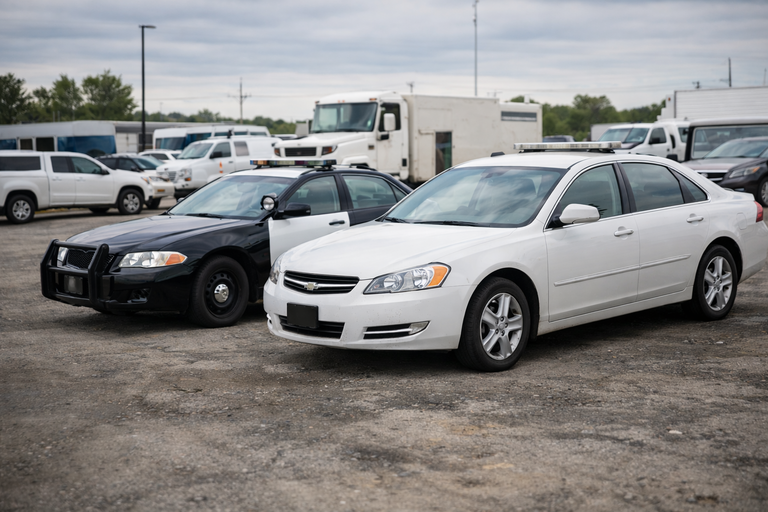
- Government fleet vehicles: These are former police cars, municipal trucks, SUVs and more that have been regularly serviced.
- Clean-title: This can be donations, fleet rotations and trade-ins.
- Stolen recoveries: These are no longer needed by the insurers.
Most of the vehicles bypass the traditional dealership pipeline, the prices are often more reflective of wholesale market demand, there are no retail markups. This is why budget-conscious buyers are drawn to online car auctions. There’s also an opportunity to buy something rare or with more variety without overcoming the traditional barriers. With open competition it is possible to secure a deal that’s well below market value.

Major Online Car Auction Platforms Available to the Public
Copart: A Leading Option for Beginners
Copart is one of the best known and largest online car auctions that’s open to the public. So, for many people that are starting out it’s usually their starting point. It’s free to register and there’s a basic and premier membership tier:
Copart: A Leading Option for Beginners
Copart is one of the best known and largest online car auctions that’s open to the public. So, for many people that are starting out it’s usually their starting point. It’s free to register and there’s a basic and premier membership tier:
Basic Membership
- The fee is $99 per year.
- Basic with no deposit: You can bid on 1 vehicle per day, up to $2,000.
- Basic with deposit: You can bid on 5 vehicles per day, with limits based on the deposit amount on file.
- Deposit requirement: 10% of your maximum total bids (fully refundable). For example, if you want to bid a total of $10,000, you would need to deposit $1,000.
Premier Membership
- The fee is $249 per year.
- You can make multiple bids at the same time.
- You may bid up to $100,000 per day.
- A $400 refundable deposit is required.
- You can place 10 preliminary bids per day and win up to 3 lots per day.
- Get priority placement in Member Services Queue.
The Bidding Process:
Copart specializes in rebuilt-title and salvaged vehicles that come from theft, accidents and floods. Certain clean-title vehicles may be available, but the inventory from salvage is dominant on the platform. A public buyer can bid on a designated public lot. With restricted vehicles a licensed broker can bid on your behalf and you won’t need a dealer’s license. This is how the bidding process works:
- A pre-bid allows you to set a maximum amount in advance.
- The live online auction occurs in real time.
- There may be a “Buy it Now” option on selected vehicles.
- A mobile app is used for bidding, alerts and watchlists.
Locations:
Copart is currently operating in more than 200 U.S. locations and they have public-access yards in every state. The previews are available in-person, but the entire buying process can be done remotely. The company has a huge inventory, they usually have more than 250,000 vehicles held globally at most times. The main drawbacks are that the salvage risk is greater and the fees are higher. Additionally, many states restrict private buyers from bidding on salvage vehicles at Copart locations, requiring broker services.
IAA (Insurance Auto Auctions): A Similar Alternative with Perks
IAA is the closest competitor to Copart, it’s open to the public with a single membership to tier:
IAA Registration and Membership
- The fee is $200 per year.
- It’s free to browse vehicles.
- No upfront deposit is required.
- There’s no limit to the number of purchases.
Vehicle Types:
IAA is also focused on insurance salvage vehicles, but mixed in you can find rebuilt titles, repairable cars and a few clean-title units. A public buyer can access the select inventory directly or use a broker for lots that are restricted based on state regulations. The online auctions are live with detailed listings and there are always preview periods. In certain states DMV and paperwork assistance is included with the purchase.
Advantages Over Copart:
IAA is often praised for having superior customer service to Copart and the vehicles they offer tend to have less extensive repair issues. The fees also tend to be lower than Copart in certain vehicle categories.
The drawbacks are there is no OBD scanning and you can't take a test drive. The inspection restrictions are similar to Copart and the fees are still more expensive than a local car auction that you might attend in-person. Like Copart, IAA access is subject to state bidding restrictions for private buyers.
Government and Local Public Auctions: More Accessible Options
Government and local public auctions offer a less intimidating alternative to IAA and Copart. These are where you may find repossessions, seizures, fleet, police, impound and government surplus vehicles.
The government vehicles tend to be well-maintained with regular service schedules. These auctions are fully open to the public, they are typically hybrid events with a mix of live streaming and online bidding. These auctions generally have fewer state restrictions compared to salvage auctions.
In most cases a small registration deposit is required. The vehicles tend to be in better condition and have lower fees, but the events are infrequent and you may need to travel further afield.
How to Participate in Online Car Auctions as a Public Buyer
Step-by-step process
- Research: First, check state bidding restrictions for where the vehicle is located. Certain states restrict driving salvage vehicles without inspection.
- Resister: When you’ve found a platform register and select a membership tier.
- Preview: Check the online photos, VIN checks (Carfax) and condition reports.
- Set your budget: Don't forget to include the auction fees, repairs, taxes, transport, and potential broker fees if the vehicle is in a restricted state.
- Strategic bidding: Always start small and watch the bidding patterns.
- Payment and fast pickup: Pay for the vehicle and pick it up quickly because the storage fees may begin in 2-3 days.
Using brokers for expanded access
If you're interested in a vehicle that's in a state where private buyers are restricted, hire a licensed broker to buy it on your behalf. You can find your broker through the auction platform or via a service like e-Repairables or RevvBid. The broker will charge a fee, but they can unlock a lot of inventory that you wouldn't be able to access without them.
Inspection tips
- Check for undercarriage photos and alignment clues.
- A third-party inspection video will usually cost around $35.
- There is no guarantee that it will drive on the road or shift properly.
- The term “Runs and drives” will only mean that the car can cover a short distance.
Payment and logistics
- Buyer premiums and taxes apply to purchases.
- The payment methods can be cash, debit or wire transfer.
- A shipping calculator can help with transport cost estimations.
Platform Comparison Table
| Platform | Membership Cost | Bidding Limits | Key Features | Fees / Risks |
| Copart | $99–$249/year | Up to $100k/day (Premier) | Massive inventory, mobile app | High fees, salvage-heavy |
| IAA | $200/year | Unlimited | Paperwork help, good support | Inspection limits, fees |
| Government / Local | Varies | No set limits | Low fees, maintained vehicles | Less frequent, travel needed |
Benefits and Risks of Public Online Car Auctions
Benefits for everyday buyers
For savvy buyers with some mechanical talent, an auction can support quick flips, but the resale laws vary by state. For everyday buyers, the benefits of online car auctions, are:
- Cost savings: The cars sell below the retail value.
- Accessibility: You can bid from home without a dealer's license though state restrictions may require broker services.
- Transparency: The auction is open and there’s competitive pricing.
- Variety: You can have access to sedans, SUVs, trucks and even exotic vehicles.
Risks and limitations to consider
State bidding restrictions: Many states limit private buyer access, requiring broker services and additional fees. The opportunity for inspections is limited with no diagnostics or test drives. The fees can add up quickly and a $500 bid can easily become a $2,000 total. There may be salvage complications and the insurance totals will require inspections and repairs. If you don’t have your emotions under control, it’s all-too-easy to overpay. The pros are that you can get some great deals, it’s exciting and you won’t need to haggle over the final price. The cons are that every sale is as-is, some mechanical knowledge is needed and without preparation there are potential losses.

Conclusion
There are numerous online car auctions open to the public, such as: Copart, IAA, government and local auctions where you can register, bid and buy vehicles with no dealer's license. However, your ability to bid directly depends on where the vehicle is located. Many states restrict private individuals from bidding on salvage vehicles, and some restrict clean title vehicles as well. In these cases, you'll need to work with a licensed broker service. There are real opportunities to score a bargain, but there are risks.
To start, check state eligibility first using resources like RevvBid's state bidding guide, focus on run-and-drive vehicles, widen the scope with a broker and make in-person inspections a priority. Before you buy, establish a budget, include potential fees and repairs and stick to it. If you search for "Online car auctions open to the public near me" or browse on Copart and IAA apps you will find what you're looking for. For a lower-risk introduction to online car auctions, go with a government auction to uncover a hidden and well serviced gem.